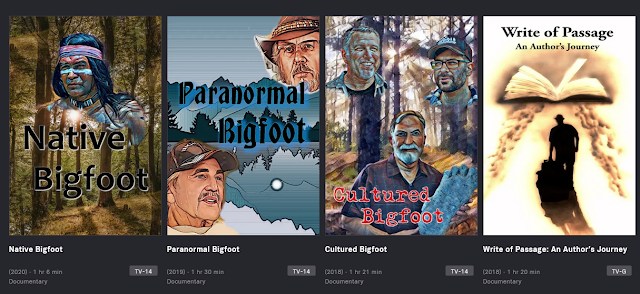
Slide # 1

Native Bigfoot

From Couchiching to Yakima, Cherokee to Apache, each First Nations tribe offers a unique glimpse into their traditions on the subject of Bigfoot. Read More

Slide # 2

Bigfoot The Legend is Real

The Crypto Crew team uncover and document evidence of the elusive legend known as Bigfoot. Read More

Slide # 3

Who Said Apes Have No Tales!

Who Said Apes Have No Tales! is a collection of previously untold anecdotes from the filming of the original Planet of the Apes and three of its four sequels. Read More

Slide # 4

Manzo Shepherd Story

In April of 1942, three men hailed a taxi to take them to Virginia across Black Mountain, where they killed the taxi driver atop the highest peak. Read More

Slide # 5

Steeds Ridge

Guided by a local man, an investigative team heads deep into the woods near a small Alabama town to try to catch a rumored Sasquatch on film. Read More

Slide # 6

Searching for Sasquatch Series

Join Jason Kenzie as he and various guest search for evidence of Bigfoot. Read More

Slide # 7

The Tree Widow

Sarah, an older God fearing widow, opens her home to women only to discover their brokenness. Read More

Showing posts with label Acting tips. Show all posts

Monday, June 17, 2024

Relaxation Techniques to Calm Nerves


Relaxation Techniques to Calm Nerves

Sometimes speakers and performers get a little nervous before making a speech or walking on stage in front of an audience or camera.

Here are some relaxation techniques that can help calm your nerves before going on stage or speaking:

1. Deep Breathing: Deep breathing can help slow your heart rate and lower your blood pressure, reducing feelings of anxiety. Try inhaling for a count of four, holding for a count of four, and exhaling for a count of four.

2. Progressive Muscle Relaxation: This involves tensing and then releasing different muscle groups in your body. Start with your toes and work your way up to your head. As you release the tension, you'll start to feel more relaxed.

3. Visualization: Close your eyes and imagine a place or situation that makes you feel calm and happy. Visualizing success can also help boost your confidence.

4. Mindfulness Meditation: Focus on the present moment without judgment. Pay attention to your breath, the sensations in your body, or the sounds around you. This can help clear your mind and reduce anxiety.

5. Yoga and Stretching: These physical activities can help reduce muscle tension and promote relaxation. Even a few simple stretches can make a difference.

6. Positive Affirmations: Repeat positive statements to yourself, such as "I am calm and confident". This can help change your mindset and reduce negative thoughts.

You might also want to read "Tips to Help You Stay Calm" - Click Here.

Remember, it's normal to feel nervous before going on stage or giving a speech. These techniques can help, but it's also important to be well-prepared and to practice regularly. 

Good Luck and You can do it!

ZMP


More from Zombie Media
First Sight, Now on Tubi TV

Check out our Partner!
Dubby! Click the banner and use the code!

Wednesday, May 29, 2024

How to become a better Onscreen Actor

How to become a better Onscreen Actor

We all want to do our best and be our best onscreen.

Becoming a better on-screen actor involves a combination of training, practice, and personal development. 

Here are some tips:

1. Take Acting Classes: Formal training provides a foundation to build upon through learned techniques, constructive feedback, and experience in scene work. We also understand that not everyone has access to these types of classes so lean on some of the other tips.  

2. Learn to Take Direction: Being able to take adjustments and notes from directors or acting coaches is critical for actors to improve. Be teachable. 

3. Create Detailed Character Backgrounds: Fleshing out a character’s full backstory beyond what’s in the script provides richer subtext and informs performance choices.

4. Analyze Scripts Thoroughly: Understanding the subtext - meaning beneath the surface of the words - is vital for connecting with a character’s motivations.

5. Develop a Unique Acting Personality: Find your acting type and then lean into it. Strive to become more charismatic, develop an artistic persona, and maybe even come up with a stage name.

6. Observe Other People and Great Actors: Deconstruct your favorite actors' habits. How do they use their bodies? What facial expressions do they use effectively? Practice these gestures and expressions. This is a great alternative for those who may not have access to acting classes. 

7. Read Scripts: Read the scripts of your favorite plays and movies. Familiarize yourself with the classics, like Shakespeare, Oscar Wilde, Anton Chekov, and Tennessee Williams.

8. Develop Audition Material: Some auditions will require you to read from a pre-selected piece or a portion of the script that will be used in the show.

9. Watch as Much as Possible and Have a Life Outside of Acting: This will help you bring more life experiences to your roles.

Remember, acting is a lifelong journey of learning and discovery rather than a destination. It takes time and patience to grow and develop as an actor. Good luck!

ZMP


More From Zombie Media


Friday, May 24, 2024

Tips to Help You Stay Calm

Tips to Help You Stay Calm

Staying calm while giving a speech or performing in front of cameras is very important to deliver a good message or performance.

Here are some tips to help you stay calm when you're in front of a camera or giving a speech:

1. Practice: The more you practice, the more comfortable you'll become. Try practicing in front of a mirror or record yourself and watch it back.

2. Prepare: Know your material inside and out. The better prepared you are, the less nervous you'll be.

3. Breathe: Deep, controlled breathing can help calm your nerves. Try inhaling for a count of four, holding for a count of four, and exhaling for a count of four.

4. Visualize Success: Imagine yourself delivering your lines perfectly and confidently. Visualization can help reduce anxiety and increase confidence.

5. Body Language: Stand or sit up straight, make eye contact with the camera or audience, and remember to smile. Good body language can help you appear more confident, even if you're feeling nervous.

6. Take Your Time: Don't rush through your lines. Speak slowly and clearly, and take pauses when needed.

7. Stay Hydrated: Dry mouth is a common symptom of nervousness. Drink plenty of water before you start filming to avoid this.

8. Warm Up: Just like athletes warm up before a game, warming up your voice and body before filming can help reduce tension and nervousness.

Remember, it's completely normal to feel nervous in front of a camera or audience. With time and practice, you'll start to feel more comfortable. Good luck! 

One of our goals at Zombie Media is to help people become better actors, speakers, and presenters even if you are not one of our clients. Of course, we hope you become a client but in the end, we want to be helpful to the community.

ZMP

More Zombie Media releases


Available on Tubi TV - Watch for Free

Wednesday, May 22, 2024

Overcoming Stage Fright


Overcoming Stage Fright

Stage Fright is something that almost every actor or public speaker has experienced at one time or another. 

Stage Fright is also sometimes called performance anxiety. It is the feeling of fear many feel before going on stage in front of an audience. You can also get this feeling in front of movie cameras or before a presentation.  

One of our goals at Zombie Media is to help people become better actors, speakers, and presenters even if you are not one of our clients. Of course, we hope you become a client but in the end, we want to be helpful to the community. With that said, here are some tips for overcoming stage fright.

Stage Fright is a challenge for many people. Here are some strategies that might help:

1. Understand Your Fear: Recognize that stage fright is a common phenomenon. It's a natural response to a perceived threat, in this case, the fear of making a mistake or being judged.

2. Preparation and Practice: The more familiar you are with your material and the more you practice, the more confident you'll feel.

3. Positive Visualization: Visualize yourself delivering a successful speech or performance. This can help reduce anxiety and increase confidence.

4. Deep Breathing: Deep, controlled breathing can help calm your nerves. Try inhaling for a count of four, holding for a count of four, and exhaling for a count of four.

5. Exercise and Move Your Body: Physical activity releases endorphins, which can boost your mood and confidence.

6. Watch a Funny Video: Laughter can help you relax and reduce anxiety.

7. Take Time to Relax: Techniques like meditation and deep breathing exercises can help ease tension and calm your mind.

8. Shake Out Your Jitters: Physical movement can help release built-up tension. Try shaking your arms and legs, or doing a quick physical warm-up before you go on stage. You have probably seen performers do this before. 

9. Turn Negative Thoughts into Positive Ones: Replace self-destructive statements with positive affirmations.

10. Remember, It's Not About You: Focus on the message you're delivering and the value it provides to the audience, rather than worrying about your own performance.

Remember, overcoming stage fright takes time and practice. Be patient with yourself and celebrate your progress. Over time you will become better and have less stage fright. 

We hope you find this information helpful.

Good luck!

ZMP


More Zombie Media releases