Slide # 1

Native Bigfoot

From Couchiching to Yakima, Cherokee to Apache, each First Nations tribe offers a unique glimpse into their traditions on the subject of Bigfoot. Read More

Slide # 2

Bigfoot The Legend is Real

The Crypto Crew team uncover and document evidence of the elusive legend known as Bigfoot. Read More

Slide # 3

Whispers From the Mountain

Fourmile, Kentucky, is a place where the mountains hold their breath, the fog moves like it remembers you, and the old coal camp still whispers after dark. Read More

Slide # 4

The Intervention of Stephen Conrad

Stephen Conrad has written twelve novels, sold millions of books, and perfected the art of pretending everything is fine. He is not fine. Read More

Slide # 5

Mysteries Unlimited: TENNESSEE

Mysteries Unlimited: Tennessee is a journey through haunted hollows, cursed roads, spectral legends, and unexplained vanishings. Read More

Slide # 6

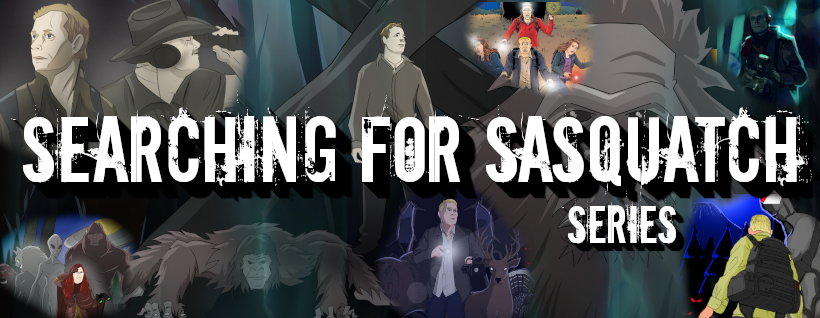
Searching for Sasquatch Series

Join Jason Kenzie as he and various guest search for evidence of Bigfoot. Read More

Slide # 7

Bigfoot In the Footsteps of Giants

In this atmospheric cryptid documentary, researchers venture deep into the Appalachian wilderness in search of signs, sounds, and sightings of Bigfoot. Read More

Slide # 8

Undisclosed Location: The Haunted Mountain

The TCC Research Team returns to a haunted Kentucky mountain property for a deeper investigation. Read More

Slide # 9

Shadow House: 40 Years of Terror

There is a house in eastern Kentucky that has a history of terrorizing its occupants. Read More

Slide # 10

Sasquatch Family Ties

The true story of how one researcher discovered a family of Sasquatch living in a remote area of the forest. Read More

Slide # 11

Paranormal Bigfoot

Paranormal Bigfoot is an investigation into a segment of the Sasquatch community that believe there is more to this enigmatic creature than a simple animal. Read More

Slide # 12

The Other Side of the Graveyard

An ominous fog obscures the ground below, and the headstones gleam pale, cloaked by the radiance of the full moon’s light. Read More

Slide # 13

The Daughters of Fourmile Ridge

For more than a century, the people of Bell County have whispered about Fourmile Ridge. They speak of little girls who vanish without a trace. Of a wasting sickness that returns every twenty-five years. Read More

Slide # 14

The Hembree House

TCC tries to unravel the mystery of a young girl’s ghost, in a Wallins Creek, Kentucky house. Read More

Slide # 15

Amadeus Creed: The Mad Butcher

La Selva was supposed to be a sanctuary. A hidden nation built on science, order, and progress. Instead, it became the domain of Amadeus Creed. Read More

Showing posts with label Know the Author. Show all posts

Wednesday, July 15, 2026

Know the Author: Russell Easterbrooks


Know the Author: Russell Easterbrooks

The History of Mason Barney’s Shipyard and Swansea, Massachusetts brings to life a remarkable piece of early American industry. This Q&A offers readers a closer look at the inspiration behind the book, the research journey, and the fascinating details uncovered about Mason Barney, his shipyard, and the unique token system that shaped everyday life in colonial Swansea. It’s a chance to step into a world where craftsmanship, community, and maritime history all meet.

Interview

ZM: What first inspired you to write this book (The History of Mason Barney's Shipyard), and what kept you motivated through the process?

RE: My late dad was a coin/token collector. He was always interested in Mason Barney's shipyard and the coin that Mason Barney had used to pay some of his shipyard employees. Then these coins could be used to buy goods at Mason's Barney.
The coins were only good at Mason Barney's store.
The search for information kept me motivated.

ZM: When readers finish your book, what’s the one thing you hope stays with them?

RE: It is hoped that the reader will get a view of a large shipyard in a small colonial town like Swansea. As well, the use of a token/coin that was made for the purpose of paying only for goods from the shipyard store.

ZM: What part of the writing process do you enjoy the most — and which part challenges you the most?

RE: The search for information on your topic and getting the information down on paper. The challenging part is getting the most information from good sources and backing it up.

ZM: Was there a moment during your research or writing that surprised you or changed the direction of the book?

RE: Getting interesting side work on your topic. Like shipbuilding, with side parts like, mermaids, cannons on ships, pirates, their flags, Davy Jones' locker, krakens, life on board ship, the use of rope, a ship's anchor, a ship's name, etc.

ZM: What advice would you give new writers who want to publish their first or next book?

RE: Write some articles for some magazines, 300-500 words. Then, when you start your book, put together some of your mag. articles and then branch out with each article for side work, adding interest, with more info. But keep researching your topic, as you will find other facts about the history you seek. Use some Latin to get the reader thinking early on; sapiens erit sapientior, meaning "the wise person will become wiser," etc.

- End

Whether you’re a history enthusiast, a maritime buff, or simply curious about the stories tucked away in small New England towns, this book offers a detailed and engaging look at a shipyard that played a surprising role in early American industry. The past leaves clues, and through careful research, those clues come together to tell a story worth remembering.

The History of Mason Barney’s Shipyard and Swansea, Massachusetts is now available on Amazon in eBook, audiobook, paperback, and hardcover editions.


ZMP

More From Zombie Media


Wednesday, July 1, 2026

Know the Author: Mark Rivett


Know the Author: Mark Rivett

In Convoy 19, Mark Rivett drops readers into a world where the living dead have overrun the U.S. mainland and survival depends on strategy, grit, and the thin thread of hope carried by those still fighting. From the USS Ronald Reagan, Dr. Henry Damico advises on what remains of the government while his wife, Kelly, struggles on the front lines in a collapsing city. As the convoy system begins to fail, Sergeant First Class Carl Harvey faces impossible odds on a mission into San Diego. In this Q&A, Rivett shares the inspirations behind his apocalyptic vision, the real‑world influences that shaped his characters, and the storytelling techniques that bring tension and realism to his zombie‑infested world.

Interview

ZM:  What first inspired you to write this book (Convoy 19), and what kept you motivated through the process?

MR: I have always been a fan of horror in general and zombies in particular. After writing about a half dozen short stories for different publishers, I decided to try my hand at writing a novel. The motivation was simply the love of horror and zombie fiction.

ZM: Did any real events, people, or places influence the story or research?

MR: A friend of mine is a Marine who served in Afghanistan and Iraq. He gave advice on military behavior, norms, speech, etc. Another friend of mine told me about his "magic bullet". I won't spoil that part of the story for readers, but that is based on real events.

ZM: What originally sparked your interest in writing within the horror or paranormal genre?

MR: I've always loved horror. We all imagine ourselves in situations like this - trying to survive against something horrific - but what really terrifies me is doing everything right, and bad things still happening. My main characters tend to always do the strategically right move, but the horror comes when, in spite of that, plans go sideways.

ZM: Which authors or books have influenced your style the most?

MR: I love George R.R. Martin's muli-perspective/flawed narrator style. That tends to be the way I like to tell a holistic story.

ZM: What advice would you give new writers who want to publish their first or next book?

MR: I use two techniques to write my books. First, I create an outline. That can be very painful for people, but knowing where the story starts and ends is really valuable. I then use what I call "the snowflake technique". I take my couple of sentences in the outline and make them a couple of paragraphs by adding description, action, dialogue, etc. I then take those couple of paragraphs and punch them up into a short-story-like chapter. I then add more and more to the "snowflake" until it branches into a vivid plot point that both advances the story and captures the reader.

-End

Rivett’s thoughtful approach to horror shines through both his novel and his insights. Drawing on military perspectives, real experiences, and a lifelong fascination with the genre, he crafts stories where characters make the right moves yet still face devastating consequences, a hallmark of true, grounded horror. His outlining process and “snowflake technique” reveal a writer dedicated to building layered, character‑driven narratives that escalate naturally into chaos. Convoy 19 embodies that philosophy, delivering a zombie tale rooted in authenticity, strategy, and the terrifying unpredictability of survival. We thank Mark Rivett for sharing his process and perspective, and we look forward to seeing where his storytelling takes readers next.

Convoy 19 is available on Amazon as an eBook, Paperback, and Audiobook


ZMP


More from Zombie Media


Friday, June 19, 2026

Know the Author: Jay Rice


Know the Author: Jay Rice

Jay Rice has built a reputation as a storyteller who walks the line between the real and the unexplained. From haunted hillsides to mysterious encounters, his tales capture the eerie charm of Appalachian folklore and personal experience. In this interview, Jay shares the inspirations behind his books, including Ghosts of Scott’s Mountain and True Short Stories of the Paranormal, and offers a glimpse into the mind of an author who finds truth in the strange.

Interview

ZM: What first inspired you to write these books (The Ghosts of Scott's Mountain, True Short Stories of the Paranormal, and The Adventures of Pete Johnson and the Hairy Ones), and what kept you motivated through the process?

JR: My inspiration for writing my books was really an idea I had in the back of my mind until my Dad passed away, and there were a few paranormal events that happened and inspired me to write "True Short Stories of the Paranormal". Most of the stories are my own experiences, with a few from friends thrown in. The ideas for the other two books came from my love of Cryptids and the Paranormal, along with working in the county school system and seeing how much the middle school kids loved to read about ghosts and Bigfoot. "The Adventures of Pete Johnson and the Hairy Ones" and "The Adventures of Pete Johnson and the Ghosts of Scott's Mountain" are in the county middle school libraries. I am truly proud of that.

ZM: Did any real events, people, or places influence the story or research?

JR: Real events influenced me to write "True Short Stories of the Paranormal". The other two books came from my love of investigating the paranormal and cryptids, as well as wanting to give something to the young kids to get them to read more.  I once gave a talk to a bunch of middle school-aged kids on the subject of Bigfoot and the paranormal. I gave each of them a brand-new no. 2 pencil and a small composition book. I told them that there were many stories inside that pencil just waiting to come out. The librarian and assistant principal held a contest to see who could come up with the best stories, and the winner would receive a copy of my books. That was a lot of fun.

ZM: How do you balance real folklore, personal experience, and imagination in your work?

JR: My balance of personal experience, folklore, and imagination is like this. I write from personal experience and my investigations, use characters from real life, but with different names, real places with different names, and glue it all together with imagination. I call it faction...Fact with a twist of fiction.

ZM: Do you have a writing routine, or do you work whenever inspiration hits?

JR: I was writing every day for a while because the ideas just kept coming. I started two more books in 2021 when I came down with a severe case of Covid. Since that time, I have had a lot of trouble concentrating on my work and have just put it to the side for a while. The brain fog has been terrible, and I did not want to try to finish those books and not be able to think clearly. Five years later, I am slowly trying to get back into my writing to finish those two books, plus some ideas for other books.

ZM: When readers finish your books, what’s the one thing you hope stays with them?

JR: When a reader finishes one of my books, I want them to feel as if they have actually been there. I want them to be able to see everything that's going on in their mind's eye as the story unfolds. I would hope that when a reader finishes one of my books, they will want to reach for another one. I hope they will remember my name and look out for new material of mine.

-End-

Whether you’re drawn to true paranormal encounters or the eerie mysteries of Appalachian folklore, Jay Rice’s stories offer a glimpse into a world where the strange feels startlingly real. His books are available now on Amazon for readers who want to explore his work further.

ZMP


More From Zombie Media


Tuesday, June 2, 2026

Know the Author: Jason J. Tavares


Know the Author: Jason J. Tavares

Today, we sit down with Jason J. Tavares, author, scriptwriter, director, actor, paranormal investigator, and even an avid recycler. Jason is a creator whose life has been shaped by movement, memory, and the strange moments that follow us when we least expect them.

His newest book, Curb Grass: Short Stories Written Between Walks, was born in the quiet spaces between daily routines and the emotional weight of an approaching loss. What began as a simple creative outlet became something deeper, a way to hold on to memory, to feeling, and to the fragile moments that define who we are.

In this collection, Jason explores the darker corners of the human experience. These intimate, unsettling stories drift between love and obsession, loneliness and connection, the real and the supernatural—always with a quiet emotional honesty that lingers long after the last page.

Interview

ZMP: Do you have a writing routine, or do you work whenever inspiration hits?

JJT: I never have to be inspired to write; the ambition to do so is always there.  In a perfect world, my desired time to conduct a writing routine would start around 7am, 4-5 days a week, roughly until noon or slightly after. 

ZMP: When readers finish your book, what’s the one thing you hope stays with them?   

JJT: Upon completion of either one of my books or films found on my Jason J. Tavares YouTube channel, my hope is that the reader or viewer walks away with something they can benefit from, whatever it may be.  

ZMP: Did any real events, people, or places influence the stories or research?

JJT: Yes, I am highly influenced by negativity because I am, by nature, an extremely negative person, one who has fought against the downing emotion my entire life, while still accomplishing some things along the way as it stares...  The negativity itself stems from fearing failure because I have had a great deal, and with each story or film I make, it moves me further away from it.

ZMP: Which authors or books have influenced your style the most?

JJT: My earliest influence came from Mr. Washington Irving when first reading "Sleepy Hollow" in elementary school.  Next came, Mr. George Orwell, with "Animal Farm" - then one day my father asked me if I would like to watch, "The Twilight Zone" and after seeing and hearing Mr. Rod Serling, narrate prior to and sometimes in between segments of his highly intelligent stories that he had written, one's full of life lessons if one were to decipher them, I was hooked not only on the unknown but with being able to sometimes see the puzzles which can hide within ourselves as well as our surroundings...  Mr. Sylvester Stallone became my fourth influence when I first saw "ROCKY" and later learning of the struggles that he went through to have it made while fighting to play the main character that he created.  These men have not influenced or molded my style in any way, but they did open my mind to being creative, and for that, I would like to say thank you. 

ZMP: What are you working on next, or what can readers expect from you in the future?

JJT: I'm working on gaining readers for my books and viewers for my films so that these stories can be enjoyed on a massive scale, allowing me to have the means to make more and more of them...  Other than that, a book about true scary stuff that has actually happened to me, and another 50 min film on my Jason J. Tavares YouTube channel, to add to my most recent ones, "Seemingly Curtis Cuspiltch" & "Radiators Popped as Pipes Rattled." 

-End-

Jason J. Tavares is a storyteller who doesn’t just write about the shadows; he listens to them. His work reminds us that even in the quietest routines, there are moments worth holding onto, and stories waiting to be told. We appreciate Jason for sharing his journey, his creativity, and the deeply personal experiences that shaped Curb Grass. It’s a collection born from reflection, loss, and love, and one that invites readers to pause, feel, and remember.

ZMP


More From Zombie Media


Wednesday, May 20, 2026

Know the Author: Brian Wayne Hand


Know the Author: Brian Wayne Hand

In this edition of “Know the Author,” we sit down with Brian Wayne Hand, the mind behind Where It Gets In: A Double Feature of Quiet Horror – Mites & Dream Repair, LLC. Hand’s work blends psychological tension with slow‑burn dread, creating stories that linger long after the final page. In this short Q&A, he shares the inspirations behind his latest book, the challenges of the writing process, and the authors who shaped his voice.

ZMP: What first inspired you to write this book, and what kept you motivated through the process?

BWH: Both of the stories featured in Where It Gets In were inspired by my love of dark, horror‑style stories that stick with you long after the book is done. Dream Repair, LLC was actually brought to life by wondering what it would be like to influence the dreams other people have.

ZMP: When readers finish your book, what’s the one thing you hope stays with them?

BWH: The characters and what they’ve been through. I want readers to latch onto whatever character they feel connected to, and maybe it inspires them to create a story of their own.

ZMP: What part of the writing process do you enjoy the most, and which part challenges you the most?

BWH: I love the process in general because it feels natural to bring a story to life and breathe life into these characters. I love it when somebody asks me a question about a character or asks me about a particular story.

I really dislike going back and doing edits or rereading something I’ve written. I’m my own worst critic.

ZMP: Which authors or books have influenced your style the most?

BWH: King and Koontz. My goal is to be Arizona’s version of Stephen King. I love The Dark Half, and Odd Thomas from Dean Koontz is one of my favorite characters.

ZMP: What advice would you give new writers who want to publish their first book?

BWH: Make sure you’re writing because you love to write, not because you have dreams of being rich and famous.

Oh, and reach out to Zombie Media, because they rock!!

-End-

Brian Wayne Hand’s work reminds us that horror doesn’t always scream; sometimes it whispers and lingers. His stories invite readers to look deeper, to find the unease hiding in the quiet moments. We’re proud to feature him and his haunting imagination in this edition of Know the Author.

Where It Gets In: A Double Feature of Quiet Horror – Mites & Dream Repair, LLC is available on Amazon. 


ZMP


More From Zombie Media


Friday, May 8, 2026

Know the Author: Dustin Grammer

Know the Author: Dustin Grammer

For this installment of our “Know the Author” series, we’re spotlighting Dustin Grammer, a rising voice in independent horror fiction. With titles like Moo, The Other Side of the Graveyard, The Structure, and Dirt Road Tales of Horror, Dustin blends rural dread, dark imagination, and character‑driven storytelling. In this short Q&A, we take a closer look at the author behind the books and the creative path that shaped his work.

Q&A

ZMP: What originally sparked your interest in writing within the horror or paranormal genre?

DG: Seems like horror was present for me from a young age, having been born in the 80's and a young kid through the early 90’s. I was scared of a lot of things, and I grew up around a lot of good storytellers. I can remember being babysat by an aunt and watching Friday the 13th, the 8th one, I believe. I had an older cousin who would tell scary stories about ghosts and werewolves; Pepsi and Doritos had the classic Universal Monsters on their products, and the elementary school library was full of monster books as well. The IT movies came out when I was in Kindergarten, I think, and I can remember kids talking about the “killer clown” a lot at school. So, I guess the combination of influences created the spark.

ZMP: When readers finish one of your books, what’s the one thing you hope stays with them?

DG: First off, I am incredibly thankful to anyone who has finished one of my books, but to answer the question, I would hope that a sense of enjoyment stays with them and also maybe that I scared them just a little…

ZMP: Do you have a writing routine, or do you work whenever inspiration hits?

DG: Inspiration hits me quite frequently, but I mainly write on weekends when I get motivated enough. Once that happens, I tend to put in hours of work at one time. Along the way, especially with my short story collections, I chart out the titles or chapters and add notes detailing draft completion and full edit percentages. I do this to have a visual motivator.

ZMP: Did any real events, people, or places influence the story or research?

DG: Absolutely yes! The majority of my stories and a lot of the characters are created that way. It could be a coworker, family member, or simply someone that I observed in public, as far as the characters go. I do this in hopes of making the characters seem like actual people and not just cardboard victims of the horrors in the stories. I also loosely create stories based on places I have traveled, and a lot of times set the stories in the southeastern states.

ZMP: What are you working on next, or what can readers expect from you in the future?

DG: I probably have a mile worth of notes to work off of, and I try to be careful about announcing what my next book project is, for the simple fact that I switch up a lot between works. I’ve switched projects three times now since the release of “MOO”, but nevertheless, I’m hoping to release another short story collection by the end of the summer. As a goal, I’d like to release at least three more books by 2028.

Dustin's books are available on Amazon

Dustin Grammer continues to carve his place in independent horror with stories that blend imagination, emotion, and the eerie familiarity of rural life. His work reminds readers that fear often hides in the quiet corners of everyday places. We appreciate Dustin for sharing his time and insight, and we look forward to seeing what dark paths his next project will explore.

ZMP


More From Zombie Media


Wednesday, April 29, 2026

Know the Author: Curtis Josh Rogers


Know the Author: Curtis Josh Rogers

At Zombie Media, we like to shine a light on the creators behind the work. Every book has a voice, but it also has a person, someone with experiences, influences, and a story of their own. In this installment, we’re featuring Curtis Josh Rogers, author of Whispers From the Mountain. This short Q&A gives readers a closer look at the writer behind the project and the path that brought his work to life.

Q & A

ZMP: What first inspired you to write this book, and what kept you motivated through the process?

Curtis:  
I was inspired to write this book because the Appalachian scary truth, the folklore, has always been a part of my life. These stories weren’t just entertainment; they came as warnings, as memories, and as pieces of identity passed down through generations. I wanted to preserve them in a way that felt honest and respectful.

What kept me motivated the most was knowing that these stories deserved to be told. They deserved to be written down. Even on the hard days, I felt a pull to finish what I started. I wanted to create something my family could be proud of and something that represents the culture and history I come from.

ZMP: When readers finish your book, what’s the one thing you hope stays with them?

Curtis: I hope they leave with a deeper respect for Appalachian culture and the stories that come from it. These tales aren’t just meant to scare you; they’re meant to show how folklore grows out of real experiences, real fears, and real communities. They’re everlasting echoes of real lives, real places, and real history.

I want readers to feel the weight of that and carry a little piece of Appalachia with them when they close the book. If they walk away feeling connected to me, my family, and the people behind the stories, then I’ve done what I set out to do.

ZMP: What advice would you give new writers who want to publish their first book?

Curtis: Start by accepting that nobody feels ready for their first book — they just start anyway. Don’t wait for the “perfect moment” or the “perfect idea.” I’ve been wanting to write since I was a kid, and here I am starting at almost 50 years old. If I had begun earlier, I’m sure I’d have more stories. Always write what won’t leave you alone. Write the story that keeps tapping you on the shoulder, running around your head at night when you’re trying to sleep.

Don’t be afraid of the messy parts. First drafts are supposed to be ugly. What matters is finishing. Once you have it on the page, you can shape it, fix it, and turn it into something real. It usually takes me three or four read‑throughs and edits before I’m happy with it.

Find a support system, whether it’s a writing group, your spouse, a few trusted friends, or an editor who understands your vision. Publishing is a long process, but having people in your corner makes it easier.

But most of all, don’t let fear talk you out of your own voice. Your story deserves to exist, even if you’re the only one who believes in it at first. Your voice matters. The world doesn’t need another version of someone else’s story — it needs yours.

ZMP: What part of the writing process do you enjoy the most, and which part challenges you the most?

Curtis: The part I enjoy most is the moment when a story finally “clicks”, when a scene I’m writing matches my memory perfectly, or when a piece of folklore suddenly lines up with the emotional truth I’ve been trying to reach. It feels like uncovering something that was always there, just buried under too many thoughts and scrambled memories. That moment of discovery is what keeps me wanting to write more and more.

Sometimes I can write ten to twenty chapters in a night, and then a thought or memory will hit me, and I’ll go off and write five or ten chapters of a different book. Right now, I’m working on four books at once.

The hardest part is pushing through the doubt that shows up between those moments. The middle of the process, when the excitement fades, and the work gets jumbled and messy, is where I struggle the most. That’s when the words feel tangled, the pacing feels off, and I start questioning everything. But that’s also where the story starts to take shape, so I’ve learned to sit with the discomfort and keep going, knowing I can edit and fix it later.

All in all, I think I enjoy the drafting stage the most, the part where ideas flow freely, and I get to explore the atmosphere, the characters, and the blend of truth and folklore without any limitations. That’s where the heart of the story forms.

ZMP: What are you working on next, or what can readers expect from you in the future?

Curtis: Right now, I’m finishing the rough draft of a novel called Every Twenty‑Five Years. It follows a Granny Woman named Hester, what we’d call a midwife today. She’s lived deep in the hollers of Fourmile, Bell County, Kentucky, her whole life. She’s a woman who has spent her life delivering other people’s children while never having any of her own.

After years of watching families lose child after child to sickness, poverty, and neglect, and after years of being unable to bear a child herself, something inside her finally breaks. She begins taking baby girls, hoping to raise six daughters of her own. She only gets to five before the coal camp discovers the truth and hangs her from a tree in the center of the camp.

With her last breath, she curses the surrounding counties: Every single year that follows my death, you shall suffer as these babies have suffered. You shall have sickness and death become of every family I’ve helped. Every twenty‑five years, five daughters will be taken. The five daughters she took will carry out the curse.

Beyond that, I’m expanding one of the true‑life inspired stories from Whispers From the Mountain — The Children on the Last Train — into a full folklore‑fiction series. I drew from the real orphan train history and built a three‑book arc around it.

  • The first book explores the origins of the company behind the orphan train and the children who were swept into it and forgotten.

  • The second book follows the mountain itself as it begins to awaken, absorbing the pain and horrors it witnesses and becoming something alive, maybe even ancient, and protective of the children.

  • The third book brings the story full circle when I encounter the children later in life. They reveal everything that happened from the beginning, to them and to the other lost children. I even learned my true connection to all of it. They task me with telling the truth that the company tried to bury.

I’m excited to have opened up this world, to pass my stories along to everyone, and ensure they will live on forever.

Readers can expect more Appalachian folklore, more generational hauntings, and more stories rooted in the real history and real people of these mountains.

-End-

Curtis Josh Rogers brings a rare blend of lived experience, cultural memory, and Appalachian truth to every story he writes. His work preserves the voices, fears, and histories of the mountains while shaping them into something new for modern readers. We’re proud to share his journey and his stories with you, and we look forward to the powerful work he continues to create. Stay tuned, there’s much more to come from Curtis and the world he’s building.

“Whispers From the Mountain” by Curtis Josh Rogers is available now on Amazon.

ZMP


More From Zombie Media